A Shared Meal With Room for Conversation
Plan a shared meal with room for conversation by choosing one easy focal point, matching the format to your guests and leaving space to linger.
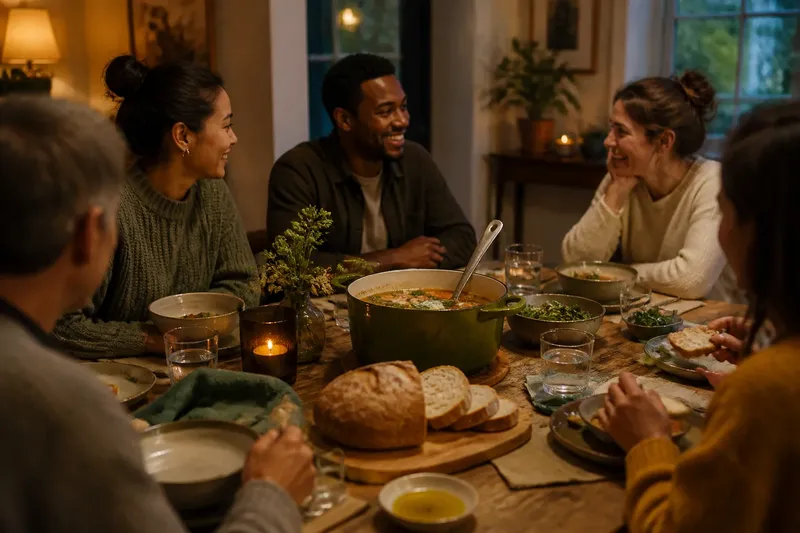
How do you plan a shared meal with room for conversation when you want people to feel welcome, not managed? Start by deciding what kind of gathering your guests can comfortably join, then choose one easy focal point for the food and leave open space around it. The meal should give people something to gather around without making every moment a scheduled activity.
Choose the meal format that suits the people coming
A relaxed meal is not one fixed arrangement. A small dinner, a drop-in supper and a picnic can all invite conversation, but each asks guests for different amounts of time, coordination and social energy. Choose the format that makes joining feel straightforward for this particular group.
- For a few close friends: A seated meal with a shared dish can make it easy to settle in and talk. Keep the menu familiar enough that you are not tied to the kitchen.
- For guests who may arrive at different times: A drop-in window with food that can be served in portions lets people come and go without interrupting a formal sequence. Make the start and end of the window clear.
- For a mixed group that does not all know one another: Choose a simple shared task, such as passing bread or assembling tacos, so conversation has a natural starting point. Avoid making participation compulsory.
- For a group with varied energy or mobility: A table with comfortable seating and easy access to food may be more welcoming than a standing buffet. Ask discreetly about practical needs rather than guessing.
- For a very small or quiet gathering: Tea, soup or a simple lunch can feel more comfortable than an elaborate dinner. A shorter invitation can still leave room for a meaningful conversation.
Think of the food as a doormat: it gives people a place to arrive, but it should not block the doorway. The point is not to make everyone talk continuously. People can enjoy a shared meal with pauses, side conversations or a moment of quiet.
Give the meal one easy focal point
A focal point is one simple feature that gives the gathering a centre. It might be a pot of soup, a loaf of bread to pass around, a bowl of seasonal fruit, or a build-your-own plate with a few uncomplicated ingredients. It does not need to be a theme, a cooking project or a display.
Choose something that suits the room and the people. A dish served from the table can keep the host present, while a buffet may work better when guests arrive on different schedules. If dietary needs are known, make the options easy to identify and provide a suitable choice without drawing attention to anyone.
Avoid adding several focal points that compete for attention. A tasting game, elaborate table decorations and a tightly planned menu can turn a conversation meal into a programme. One clear centre gives guests a shared reference without demanding that they perform or follow instructions.
Leave gaps in the plan on purpose
Plan only the parts that help people arrive and feel oriented: when to come, where to put coats, how the food will be served, and whether there is a natural end time. Leave the rest flexible. Conversation may gather around a topic, drift to something ordinary, or pause while people eat.
It can help to make the practical information explicit in the invitation. Say whether guests should arrive at a particular time or within a window, whether they need to bring anything, and whether the meal is seated or casual. If you would welcome help, offer a small, optional task such as carrying plates rather than leaving guests to guess what is needed.
Imagine you are inviting a few neighbours after work and know that one may be late. You choose a pot of vegetable soup and bread as the focal point, set the food out so it can be served as people arrive, and invite everyone for an open hour rather than promising a formal dinner. The expected result is a meal that can begin without waiting for a perfect moment, while those who arrive early have space to talk and the late guest can join without a grand entrance.
Match the setting to the conversation you want to allow
Seating affects who can hear and speak, so choose an arrangement that fits the group rather than copying a formal table setting. A small table encourages a shared conversation; a few chairs around a coffee table may suit a relaxed, brief visit. For a larger group, two nearby seating areas can give people room to form smaller conversations without splitting the gathering into isolated corners.
Consider sound and access. Background music should stay low enough that people do not need to raise their voices. Keep a clear route between seats and food, and place serving dishes where guests can reach them without stretching across someone else. If the weather and setting allow, an outdoor meal can offer a change of atmosphere, but do not make it the only comfortable option.
Lighting and table details can support ease without becoming a project. A clear surface, reachable napkins and enough room for plates matter more than a matching centrepiece. If a candle or decoration takes up space or makes someone uncomfortable, leave it out.
What fits different kinds of gatherings?
What works when guests do not know one another?
Choose a shared dish or a low-effort way to serve food, and make introductions naturally as people arrive. A simple prompt such as asking how someone knows the host can open a conversation, but let guests take it elsewhere rather than running a round of introductions.
What if someone has dietary needs?
Ask about food needs when inviting people, then plan at least one clearly suitable option and label dishes plainly. If a need is complex or uncertain, ask the guest what would make the meal comfortable instead of trying to infer it.
How can a host keep conversation from feeling forced?
Be present, make room for pauses and avoid assigning everyone a question to answer. If conversation stalls, offer an ordinary opening—such as asking how someone came across a dish—then accept a quiet moment if the group does not pick it up.
What if the host has little time or energy?
Choose food that needs little attention during the gathering, such as bread, cheese, fruit and a prepared soup, or invite guests to contribute one clearly described item. Keep the invitation modest and let people know if the occasion is casual.
Make hosting manageable without making it a performance
Set a boundary around what you can take on. A gathering can be warm with a borrowed tablecloth, shop-bought food or a short menu. If you would rather not cook, say so plainly and choose a format that makes that comfortable, such as a shared takeaway meal or a bring-and-share lunch with agreed contributions.
Do not assume that the host must carry every conversation or attend to every detail. Guests can pour water, pass plates or help clear up if they offer, but the invitation should not quietly turn into a list of duties. Thank people for help and let them decline without explanation.
For a shared meal with room for conversation, the best plan is the one that fits the group’s needs and leaves you free to be part of it. Decide on a format, choose one easy focal point, make practical details clear, then leave enough unfilled time for people to meet each other at their own pace.